Solar Panels and Batteries: A 2026 Buyer’s Guide for Pakistan
Choosing hardware is where most solar journeys either succeed or quietly fail. This solar panels and batteries buyer’s guide cuts through the datasheet jargon so you can shop with confidence in 2026. Whether you plan to buy solar panels in Pakistan for a rooftop tie-in or build a full battery-backed home, the two components you must not get wrong are the modules that generate power and the cells that store it.
Prices have softened and technology has matured, which means buyers now have real choices rather than one-size-fits-all kits. Let us break down what actually matters.
Panel Technology: What Separates Good From Cheap
Nearly every quality panel sold in Pakistan today is monocrystalline, but not all mono panels are equal. The technology label tells you how the cells are wired and how well they survive heat, which is decisive in a country where rooftops routinely exceed 60°C.
- PERC: The affordable workhorse. Solid efficiency, widely stocked, good value.
- TOPCon: The 2026 mainstream. Better low-light and high-heat performance, lower degradation.
- N-type / HJT: Premium tier. Highest efficiency and lowest heat losses, at a price.
Look past the wattage headline and read the temperature coefficient. A panel losing 0.29% per degree keeps far more output on a scorching Multan afternoon than one losing 0.40%. Over 25 years that gap is thousands of units.
Reading a Panel Datasheet Like a Buyer
Four numbers decide value for money. Everything else is marketing.
| Spec | What It Means | Good 2026 Target |
|---|---|---|
| Efficiency | Power per square metre | 21% or higher |
| Temp. coefficient | Loss per °C of heat | -0.30%/°C or better |
| Product warranty | Defect cover | 12–15 years |
| Performance warranty | Output guaranteed at year 25 | ≥ 87% |
The National Renewable Energy Laboratory (NREL) tracks certified module efficiencies and confirms that top commercial panels now clear 22%, so treat anything advertised above 24% for a standard residential panel with healthy scepticism.
Batteries: The Chemistry Decision
If panels are the engine, batteries are the fuel tank, and here the choice is stark. Lead-acid is cheap upfront and painful over time; lithium costs more today and wins on every other axis.
Lithium vs Lead-Acid
- Cycle life: Lithium (LiFePO4) delivers 4,000–6,000 cycles; tubular lead-acid manages 1,200–1,500.
- Usable depth: Lithium safely uses 90% of capacity; lead-acid only about 50%.
- Maintenance: Lithium is sealed and hands-off; lead-acid needs water top-ups and ventilation.
- Efficiency: Lithium round-trips at ~95%; lead-acid closer to 80%.
Because you can actually use 90% of a lithium pack, a 5 kWh lithium battery delivers more real energy than a 10 kWh lead-acid bank, and lasts three to four times longer. When you compare the lithium battery price in Pakistan against replacement cycles, lithium is usually cheaper per delivered kilowatt-hour despite the higher sticker.
Sizing Storage to Your Night
Do not buy a battery by gut feeling. Add up the wattage of everything you want running after sunset, multiply by the hours you need it, and add 20% headroom. A typical Pakistani household backing fans, lights, TV, and a fridge overnight needs 5–7 kWh of usable lithium storage.
Matching Panels and Batteries to the Inverter
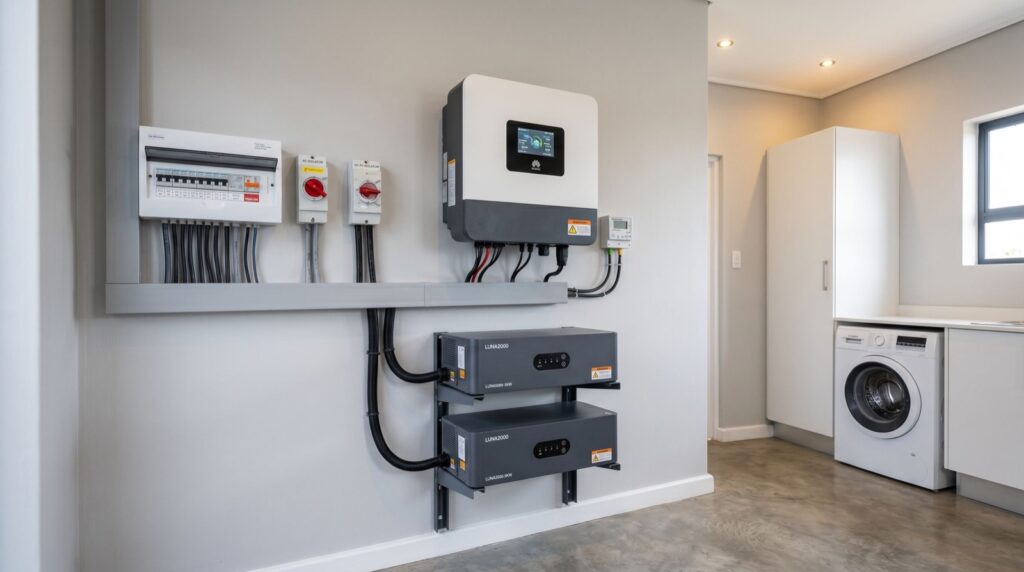
A common buyer mistake is treating the three components as unrelated purchases. They are a team. Your hybrid inverter must accept your battery voltage (48V is now standard for lithium) and its MPPT range must suit your panel string voltage. Buy the inverter and battery from a compatible ecosystem and confirm firmware support, or you will fight communication errors for years.
Where to Buy and What to Verify
Grey-market panels with photocopied warranties flood the market every summer. Buy from sellers who provide genuine manufacturer warranty registration and local RMA support. Reputable quality service providers stand behind the paperwork, not just the price tag.
Before you pay, confirm these five points:
- Panels carry an IEC 61215 / 61730 certification stamp.
- The battery includes a BMS and a datasheet cycle rating.
- Warranty is registered to your name, not the shop’s.
- The inverter, battery, and panels are voltage-compatible.
- You receive itemised invoices for insurance and net-metering paperwork.
Total Cost of Ownership, Not Sticker Price
The cheapest kit on the shelf is rarely the cheapest system over ten years. Smart buyers in 2026 compare on cost-per-delivered-unit and total lifespan, because a bargain panel that degrades fast or a lead-acid bank you replace twice will quietly erase every rupee you thought you saved at purchase.
Consider two storage options for a home needing 5 kWh of usable overnight energy. The lead-acid route looks cheaper on day one but tells a very different story once you factor in replacements and wasted capacity.
- Lead-acid path: Larger 10 kWh bank (because you only use half), replaced roughly every three years, plus water top-ups and lower round-trip efficiency.
- Lithium path: A right-sized 5.1 kWh pack that lasts a decade or more, sealed and maintenance-free, delivering 95% of what it stores.
Over a ten-year window the lithium pack is typically installed once while the lead-acid bank is bought three or more times. When you spread the numbers across delivered kilowatt-hours, lithium almost always wins. This is the single most common place first-time buyers overpay by chasing a low upfront figure.
Warranty Is Part of the Price
A 25-year performance warranty is only worth the paper it sits on if the seller can honour it locally. A slightly pricier panel with genuine, registrable warranty support beats a cheaper grey-market unit whose warranty evaporates the moment you file a claim. Treat after-sales support as a line item in your budget, not an afterthought.
Frequently Asked Questions
Should I buy solar panels in Pakistan based on wattage alone?
No. Wattage tells you nothing about heat losses or longevity. Compare efficiency, temperature coefficient, and the 25-year performance warranty before you decide.
Is lithium worth the higher battery price in Pakistan?
For daily cycling, yes. Lithium lasts three to four times longer, uses 90% of its capacity, and needs no maintenance, making its cost per delivered unit lower than lead-acid despite the higher upfront price.
Can I mix panels from different brands?
Within a single string you should match electrical specs closely. Mixing wattages or technologies on one MPPT input drags the whole string down to the weakest panel. Keep strings uniform.
How big a battery do I need for load-shedding backup?
Add up your overnight load in watt-hours and add 20%. Most homes land at 5–7 kWh of usable lithium storage for fans, lights, TV, and a refrigerator.
Conclusion
A smart solar panels and batteries purchase in 2026 comes down to reading four panel specs, choosing lithium chemistry for storage, and buying a compatible, warranty-backed ecosystem rather than three loose parts. Shop on total delivered energy and lifespan, not sticker price alone. When you are ready to compare genuine, certified hardware, browse verified stock and request a tailored quote today.